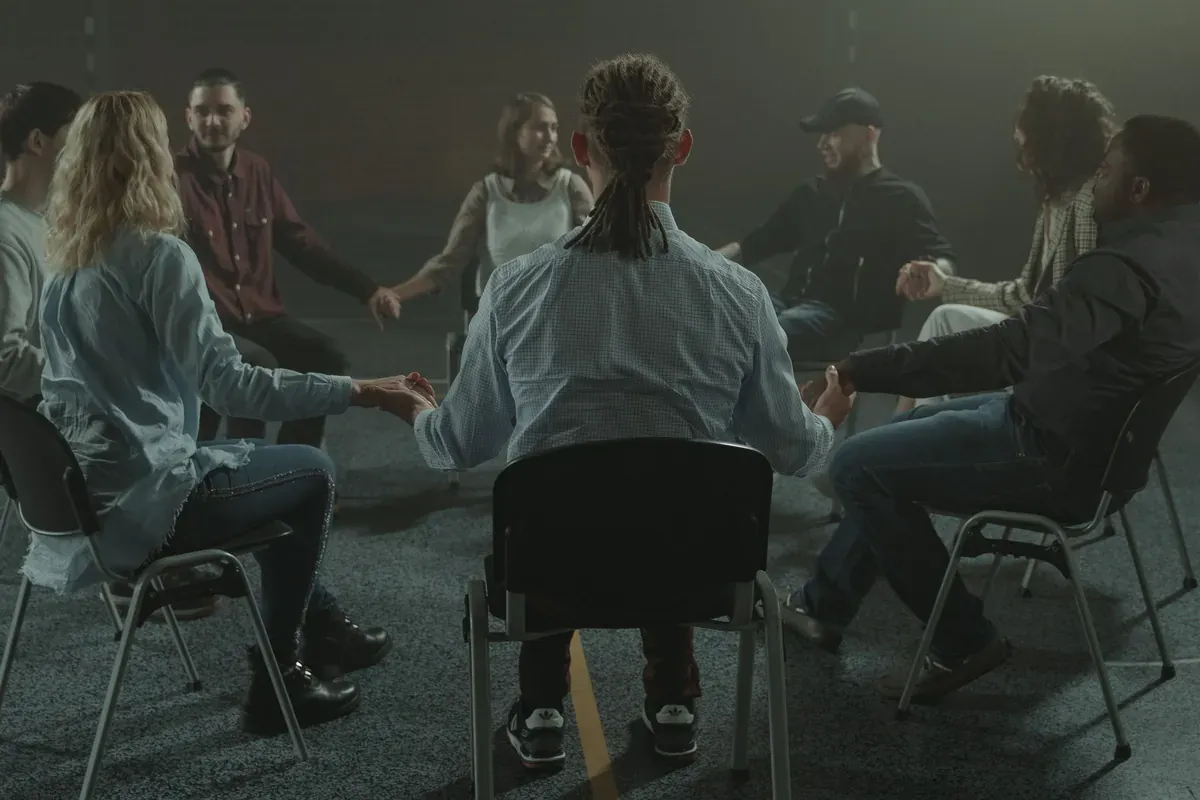
Most people who walk into their first peer support group expect one of two things. They expect a circle of folding chairs where everyone has to share, or a room of people who have it worse and will think they're overreacting. Neither picture is usually accurate. And the fear of both keeps a lot of people from ever trying.
This article covers what a good peer group actually looks like, where to find one in Canada, what to watch out for, and how to get the most from it.
Why groups help when talking one-on-one doesn't
Isolation is one of the most damaging parts of service-related trauma. You start to believe you're the only one who reacts this way, the only one who can't shake a certain call, the only one whose marriage is straining. Then you stop telling anyone.
A group breaks that belief faster than almost anything else. When five people who've done the job nod along as you describe the nightmare, the anger in the grocery store, or the strange numbness at your own kid's birthday, the shame starts to lose its grip. You also hear what helped them, which is often more practical than anything in a brochure.
Groups also give you something one-on-one conversations can't: watching other people at different stages of recovery. The person two years ahead of you is proof that things can shift. And sometimes the person who's just arrived lets you see how far you've already come. Many people find they get as much from helping someone else in the room as from being helped.
As OSISS, the national peer network for CAF members and Veterans, puts it, peer support connects you with "an understanding ear, a supportive community of people with similar experiences" and practical resources. It's "for peers, by peers".
What a good group looks like
- Trained facilitators with lived experience. Good programs screen and train their peer leaders. A facilitator should keep the conversation safe, make sure no one dominates, and know when to point someone toward clinical help.
- Clear ground rules up front. What's said in the room stays there, except for clear safety exceptions, which they should explain at the start. No one is forced to share, and there's no ranking whose trauma counts.
- No graphic detail. Good groups focus on how experiences are affecting people now, not on retelling scenes in vivid detail. Those retellings can retraumatize everyone in the room.
- Connection to more help. Facilitators should know local clinicians, benefits and crisis options, and should help people get there.
- You choose your level. Listening for the first few sessions is completely fine.
Where to find peer support in Canada
Options depend on who you are and who you served with:
- CAF members, Veterans and families: Veterans Affairs Canada points to Operational Stress Injury Social Support (OSISS), a national peer network run jointly with National Defence. It offers one-on-one and group support, plus a family peer program.
- RCMP members and Veterans: VAC also lists Support for Operational Stress Injury (SOSI), a national peer network for current RCMP members, regular or civilian, and for RCMP Veterans who are having trouble with daily life because of their service.
- Police, fire, paramedics, dispatch and corrections: many services have their own peer teams, and unions and associations often run programs too. Ask your peer team lead, your union rep or your EAP. Some provinces also have programs run by first responder organizations.
- Online: if there's nothing local, or you'd rather not be seen walking into a meeting, moderated online rooms can be a starting point. Our peer chat is one. Make sure any online space has active moderation and clear rules.
Red flags to watch for
Not every group is a good one. Be cautious if a group:
- pressures people to share details, or treats tears or silence as weakness
- discourages professional treatment or medication ("we don't need shrinks here")
- is mainly a venting session about the employer, with no attention to recovery
- has no clear confidentiality rules, or a facilitator who gossips
- leaves you consistently worse after every meeting, not just tired
It's fine to try a different group, or a different format. Fit matters.
What peer groups can't do
Peer support can help a great deal, but it isn't treatment. If you're living with persistent nightmares, flashbacks, avoidance, constant hypervigilance, or depression that won't lift, a group works best alongside a clinician trained in trauma-focused therapy, not in place of one. A good group will encourage that, and members who've done therapy are often the most convincing voices in the room.
And a group isn't a crisis service. If you're thinking about suicide, call or text 988. If you're in immediate danger, call 911.
Getting the most from your first few sessions
- Go three times before you decide. The first session is almost always awkward.
- Prepare one sentence. Something like "I'm here because sleep's been gone since spring and I'm short with my family." That's enough.
- Write afterwards. Jot down what landed and what you want to bring next time. The 30-Day Journal has prompts and a weekly reflection page that pair well with group work.
- Bring a question. "How did you tell your partner?" or "Who's a good therapist that gets the job?" are the kinds of questions a room full of peers answers best.
If you'd like to understand what's happening to you before you walk in, our Survival Guide is a short, direct read on what repeated exposure does to your brain, why the culture keeps people quiet, and why reaching out doesn't end a career. Knowing that often makes the first meeting easier.
— Through the Fire
Sources
- Peer support, Veterans Affairs Canada.
- Operational Stress Injury Social Support (OSISS), Canadian Forces Morale and Welfare Services.
This article is general information from people with lived experience, not medical advice. If you're struggling, talk to a qualified health professional.