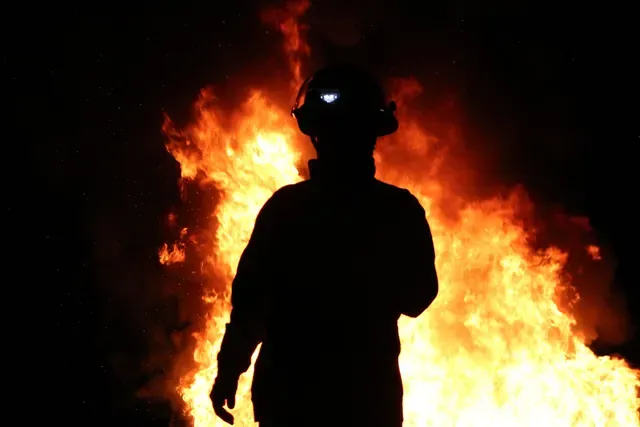

The people most at risk of missing the warning signs are often the ones everyone else depends on. That's the medic who never calls in sick, the officer who takes every overtime shift, the veteran who's "always fine". Being good at the job means being good at pushing past discomfort. The trouble is that the same skill hides overload until it's already serious.
This is a plain list of signs worth taking seriously, why capable people overlook them, and what to do when you recognize yourself in it.
How common this is
Overload isn't a personal failing. It's an occupational injury. Canada's Federal Framework on PTSD cites a 2016–17 survey of more than 5,800 Canadian public safety personnel in which 44.5% reported clinically significant symptoms consistent with one or more mental disorders, and about 23% showed symptoms of PTSD. Dispatchers, correctional workers, firefighters, police, paramedics and RCMP members all took part. If you're struggling, you're in large company.
Why high performers miss it
- The job rewards suppression. Switching off emotion on scene is necessary. Switching it back on at home doesn't happen automatically.
- It builds gradually. Overload rarely arrives with one call. It accumulates over years of exposure, shift work and poor sleep, so each new "normal" feels only slightly worse than the last.
- Comparison. "Other guys saw worse." There's always someone who saw worse, and it has nothing to do with what's happening in your body.
- Fear of consequences. Worry about fitness for duty, promotion or reputation makes it safer, in the short term, not to look.
The warning signs
Common reactions after trauma include trouble sleeping, being on edge, and replaying events. As the US National Institute of Mental Health explains, many people recover from these naturally. It's when they persist and start to interfere with daily life that they point to something more, such as PTSD. Watch for patterns lasting weeks, not one rough night.
In your body
- Sleep falling apart: you can't fall asleep, you wake at 3 a.m., or you have recurring nightmares
- Constant tension, headaches, jaw clenching, stomach problems
- Feeling wired and exhausted at the same time
- Startling hard at sudden noises, sirens or your phone
In your head
- Calls replaying without warning
- Trouble concentrating, forgetfulness, small mistakes you don't usually make
- Cynicism that has gone from dark humour to genuinely not caring
- A sense of dread before shifts, or relief when a call is cancelled
- Thoughts that you're a burden, or that people would be better off without you
At home and with people
- Snapping at your partner or kids over small things, then feeling ashamed
- Pulling away from friends, skipping family events, wanting to be alone
- Feeling numb, even at moments that should feel good
- Partners saying "You're not the same" or "I can't reach you"
In how you cope
- Drinking more, or needing a drink to come down after shift
- Taking risks: driving too fast, picking fights, spending recklessly
- Burying yourself in overtime or the gym so there's no quiet time to think
- Avoiding certain call types, places or people because of what they bring up
The signs that mean act today
Some signs don't wait for a pattern:
- thoughts of suicide, or of not wanting to wake up
- making plans or getting the means
- saying goodbye or giving things away
- a sudden calm after a long stretch of distress
If that's you, or someone you're worried about, call or text 988 now. If there's immediate danger, call 911. If you're worried about a crewmate, ask them directly whether they're thinking about suicide. It won't plant the idea, and it may be the question they've been waiting for someone to ask.
What to do if you recognize yourself
- Say it to one person. A partner, a peer supporter, a friend from the job. "I'm not doing great and I think it's been building" is enough of a start.
- Get the basics checked. See your family doctor about sleep, blood pressure and drinking. The body side matters.
- Use the confidential routes. Your EAP, a peer team, or the VAC Assistance Service (1-800-268-7708) if you're a CAF Veteran, a former RCMP member or a family member.
- Track it. A few lines a day about sleep, mood and triggers will show you, and anyone helping you, what's actually going on. The 30-Day Journal includes a daily physical and mental check-in for exactly this.
- Understand what's happening. Our Survival Guide explains in plain language what chronic exposure does to the brain, and why the culture so often keeps people quiet until they break.
If you lead a crew
Supervisors and senior members often spot these signs first. That might be a reliable member who's suddenly late, short-tempered, or volunteering for every shift so they don't have to go home. Have a quiet word in private: "You've seemed off lately. I'm not writing anything down, I just want to know how you're doing." That often opens more than any wellness poster. Know your peer team's and EAP's numbers so you can hand them over on the spot. And talk about your own hard stretches when it's appropriate. When a leader says "I've been there", it gives everyone else permission.
Catching it early is the job
You'd never ignore the warning lights on your rig or your kit. The same goes for your own system. Noticing early is what lets you keep doing the work you care about, and keep the relationships that matter. If you want to talk to people who've seen the same signs in themselves, our peer chat is open. For more on how repeated exposure builds up over time, see our page on complex PTSD.
— Through the Fire
Sources
- Federal Framework on Post-Traumatic Stress Disorder (2019), Public Health Agency of Canada.
- Post-Traumatic Stress Disorder, U.S. National Institute of Mental Health.
This article is general information from people with lived experience, not medical advice. If you're struggling, talk to a qualified health professional.